Aquarist Species: Betta Albimarginata
Aquarist: Sunfish
Species Profile: Betta albimarginata
Common Name: Strawberry Betta, White Seam Betta
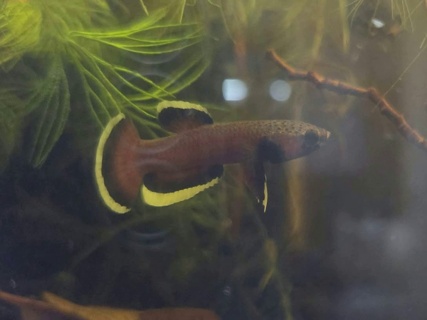
Species Photo by: David Dutch Simard
Description: A small but fierce maroon and black labyrinth fish with white-margined fins that lives in East Kalimantan blackwater swamps. Their colors intensify or fade to golden-brown depending on their mood and their environment, like tiny chameleons with a limited color palette. Betta albimarginata is closely related to Betta channoides, which is stockier than B. albimarginata and doesn’t have a white margin on its dorsal fin. CARES lists Betta albimarginata as Vulnerable, but the IUCN Red List lists it as Endangered.
Category: Anabantids
Global Region: Asia
Distribution: East Kalimantan, Indonesia
CARES Classification: Vulnerable
Aquarist Notes
Photo of aquarist's species:
Collection Point: Malinau
Genetic Line: Other
Year Acquired: 2024
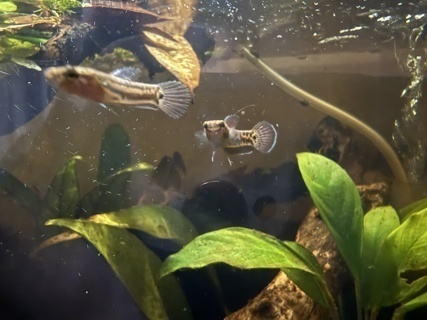
I bought my first pair from Moonlight Aquatics in June 2024. The store's owner said they were captive-bred and genetically from the Malinau locality, but he wasn't sure how many generations they were removed from wild-caught ancestors. I tried reaching out to the person he got them from but received no response. In 2025 I traded some of my original pair's offspring for a female bred by a GSAS Aquarium Club member, the female's lineage tracing back two generations to parents also from Moonlight Aquatics (almost certainly parents from a different export by the same breeder). Later in 2025 I also purchased four F1 unsexed juveniles from inmytanks.com. The seller says they’re also from Malinau lineage. Due to some physical differences between the two lines of fish, however, they are likely from different collection points around Malinau. (Attached photo shows some of the differences between a female descended from Moonlight Aquatics bettas (left) and an F1 “In My Tanks” female (right).
While both have two black or very dark brown longitudal lines running the length of their bodies made up of overlapping markings (they look like short vertical paint strokes), the first bloodline's longitudual lines are mostly continuous, while the second bloodline's longitudal lines have visible gaps, making the fish look spotted. The second line's red coloring is also slightly brighter, and there are small spots at the base of the fins. When fish of both lines are young, there's also more of a contrast between the “In My Tanks” line’s fins' white margins and the rest of their fins.
Spawning notes:
Species Spawned: Yes
Spawning seems to be triggered by feeding the parents very well for a week or two and then doing a water change. I need to experiment more to find out other factors.
I've had Betta albimarginata successfully spawn in ~6.8–7.5 PH water. I've also kept them in < 6 PH water, but haven't had them spawn in it yet, though they regularly show signs of interest in breeding. B. albimarginata will spawn in single-pair tanks and in tanks with several bettas, but spawning seems to happen more frequently the fewer bettas there are in the tank. I've had them spawn in tanks with and without botanicals, and with varying levels of lighting. Both males and females initiate spawning. Heavily planted tanks or tanks with other barriers breaking lines of sight have proven to be helpful, as it gives the fish a break from one another if they need, and gives males places to hide when they're holding eggs. (I've had this take between 13 and 16 days.)
I would not recommend keeping two females and one male in a tank. The only time I've had actual violence between bettas is when two females started fighting over a single available male (who did not seem to care and spawned with both). I realized and separated them out before either female had any lasting damage.
It's also important to give males a break between spawns. They don't eat while they're holding, and some particularly enthusiastic ones will spawn a day or two after releasing their previous spawn, putting them at risk of starvation.
Have Reared Fry? Yes
Betta albimarginata fry are generally very hardy and easy to care for. They won't recognize food as food unless it's wiggling, but the fry can eat baby brine shrimp from the first day they're released. They do best when kept to a small area for the first month or so of life, since it makes it easier for them to hunt down their food.
The most difficult part of rearing them has been keeping their parents from eating them. Some people report having no problems, but for some reason, all of the males I've had hold so far (4, a father and three of his sons) will finish releasing their fry then soon after chase them down and start eating them. The newborn fry, which rest almost motionless for their first few days, are well-camouflaged but easy pickings when they drift from their chosen leaf or plant.
The window between when the last fry are released and when their fathers suddenly see them as food is, unfortunately, narrow, seemingly only between half an hour to a couple of hours.
So far my best fry survival percentages have come from moving the male to a heavily planted breeder box when he's close to releasing them, watching him carefully throughout the day, and when he seems to not have any fry left, offering him a small amount of food. If he goes for it, I move him out of the breeder box and finish feeding him. If he isn't interested in eating, I wait for more fry and try again in an hour or so. It's not ideal, as I can't always be there to watch him. So far I've seen between 2 and 18 fry per successful spawn.
I may try stripping a male of eggs and hatching them in an egg tumbler at some point to see if it results in better survival rates. Three of the four F1 juveniles I recently bought also ended up being male, and they aren't related to any males I've had hold so far, so once the F1s are full-sized, I will see if there's any differences in how they hold eggs and treat their fry.
Young fish available? Yes